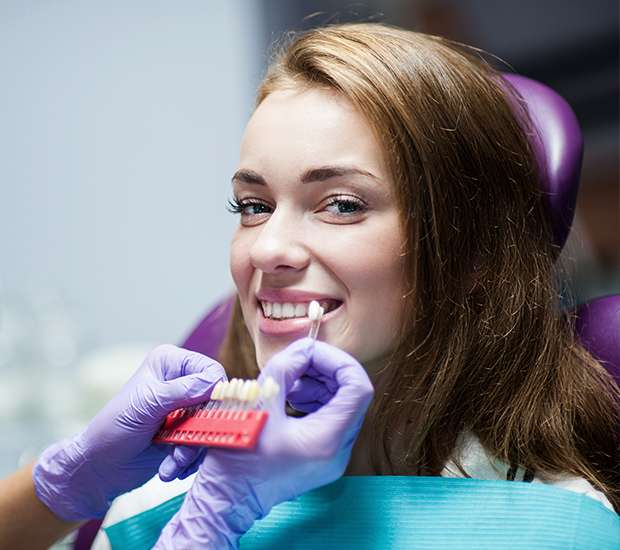
Teeth Whitening Lutz, FL
Everyone deserves a smile that they can be proud of. One of the most common ways to enhance a smile is through teeth whitening. Professional whitening achieves long-lasting results by removing stains and discoloration.
Teeth whitening can help you achieve a brighter, more beautiful smile. Today's Family Dental offers teeth whitening procedures in Lutz and the surrounding area so you can smile with confidence. Call us at (813) 435-1412 to learn more about our services or schedule an appointment.
Benefits of Teeth Whitening at the Dentist’s Office
Teeth whitening at the dentist's office is the safest and most effective method of achieving whiter teeth. In-office whitening occurs under carefully monitored conditions. Teeth whitening under professional supervision allows for safe, controlled, pain-free treatment.
Professional whitening products use a stronger concentration of hydrogen peroxide than over-the-counter products. Thus the whitening process takes less time to achieve better results. Treatment under a dentist's care ensures that sensitive gums are not irritated during the whitening process. The results should be long-lasting with careful oral hygiene practices.
“Teeth whitening under professional supervision allows for safe, controlled, pain-free treatment.”
What to Expect at the Consultation
Before the teeth whitening procedure, people will need to attend a consultation. This appointment will allow the patient to discuss their dental history, overall health, and teeth goals. It is also crucial to bring up any ongoing dental issues, such as teeth and gum problems that will require treatment before teeth whitening can occur.
We will also examine the patient's teeth to see if they will benefit from whitening treatments. It is important to note that existing dental work, such as crowns and veneers, will not respond to conventional whitening agents. If treatments are a viable option, we will help determine which whitening product or technique will be the most effective.
“This appointment will allow the patient to discuss their dental history, overall health, and teeth goals.”
Teeth Whitening Treatment Length
Teeth whitening done in the office is the quickest method to whiten teeth. People can achieve much brighter teeth more quickly in-office because the concentration of bleaching solution is much stronger than other options. Professional teeth whitening requires an appointment.
Teeth can get three to eight shades whiter with several 30 to 60-minute sessions. Other tooth whitening treatments are available that can whiten teeth in a single two-hour session. People interested in teeth whitening should contact us for information about the available treatment options.
“Teeth whitening done in the office is the quickest method to whiten teeth.”
Check out what others are saying about our dental services on Yelp: Teeth Whitening in Lutz, FL
Who Should Get Teeth Whitening at the Dentist
Teeth whitening at the dentist is best for people with moderate to severe discoloration and staining. These stains can occur due to aging, smoking, medications, and certain foods and drinks. People with yellow or brown discoloration on their teeth are ideal candidates for professional teeth whitening. Pregnant and lactating women should also not receive teeth whitening.
We do not recommend teeth whitening for people with gum disease, worn down enamel, and existing decay. Cavities and damage will require treatment before a person can whiten their teeth. People with teeth that are gray or purple may not respond to bleaching. People interested in teeth whitening can speak with our team to determine the best-suited options for their needs.
“Teeth whitening at the dentist is best for people with moderate to severe discoloration and staining.”
Questions Answered on This Page
Q. What are the benefits of teeth whitening at a dentist's office?
Q. What happens during a consultation for teeth whitening?
Q. How long does teeth whitening treatment take?
Q. Who can get their teeth whitened at the dentist?
Q. How can people maintain their results?
People Also Ask
Q. What are teeth whitening options at the dentist?
Q. What are cosmetic dental services?
Q. What restorative methods can help patients improve their smiles?
Q. What are the benefits of dental cosmetics?
Q. What are required home care routines for cosmetic treatments?
Q. Why should someone see a cosmetic dentist?
Follow-Up Care
Although professional teeth whitening is not permanent, people can help their results last longer with proper care and maintenance. People should avoid smoking and food and drinks that stain teeth, such as coffee, tea, or red wine. It is also essential to brush teeth twice a day, floss daily, and use mouthwash to reduce plaque.
People can also use whitening toothpaste as per the dentist's recommendation, such as Colgate Total SF Fresh + Whitening ™ Toothpaste, hello® Naturally Whitening Toothpaste, or Colgate® Optic White® Toothpaste. Keep up with regular dental appointments for teeth cleaning. Patients can discuss touch-up treatments at six-month intervals with our team.
“Although professional teeth whitening is not permanent, people can help their results last longer with proper care and maintenance.”
Frequently Asked Questions
Q. Is teeth whitening a safe procedure?
A. It is considered a safe procedure. There are possible side effects, though. The teeth may become more sensitive during treatment. Gums can become irritated from the whitening process. These symptoms should go away once the whitening products are no longer being used.
Q. Do I need to get my teeth cleaned before a teeth whitening procedure?
A. A professional tooth cleaning removes plaque and tartar, which makes the teeth whitening procedure more effective. It also helps to keep the color uniform while whitening. During the dental cleaning appointment, the exam can identify any tooth decay or gum diseases that need to be treated before whitening.
Q. Can I get teeth whitening if I have crowns or a bridge?
A. Whitening products only work on natural teeth. A person with implants, crowns, or bridges can speak with our team about maintaining tooth coloration across all teeth. People with previous dental work can still receive a whitening treatment.
Q. Can I still get teeth whitening if I have other dental concerns or issues?
A. Our dental team can assess a patient's oral health to determine the right treatment course to get the desired results. Gum disease and tooth decay may need to be treated before whitening for the desired results. A consultation from our dental team will help you find solutions for good oral health.
Q. Does dental insurance cover teeth whitening?
A. Most dental insurance plans do not cover teeth whitening or other cosmetic procedures. Every insurance plan is different. People interested in teeth whitening should contact their insurance provider for more information.

Scan here to view this page, Teeth Whitening, on mobile

Cosmetic Dentistry Terminology
Call Us Today
Teeth whitening is a safe and effective way to achieve the smile that you have always wanted. Today's Family Dental can help. Call us today at 813-435-1412 to learn more about our services or schedule an appointment.
Helpful Related Links
- American Dental Association (ADA). Glossary of Dental Clinical Terms. 2026
- American Academy of Cosmetic Dentistry® (AACD). Home Page. 2026
- WebMD. WebMD’s Oral Care Guide. 2026
About our business, license, and website security
- Today’s Family Dental was established in 2016.
- We accept the following payment methods: American Express, Cash, Check, Discover, MasterCard, and Visa
- We serve patients from the following counties: Hillsborough County and Pasco County
- We serve patients from the following cities: Lutz, Cheval, Land O’ Lakes, Odessa, Greater Northdale, Carrollwood, Tampa, Brandon, Wesley Chapel, Trinity, New Port Richey, Westchase, Zephyrhills and Lakeland
- FL (License #DN20683). View License Information and Specifics
- National Provider Identifier Database (1538574769). View NPI Registry Information
- Healthgrades. View Background Information and Reviews
- Norton Safe Web. View Details
- Trend Micro Site Safety Center. View Details

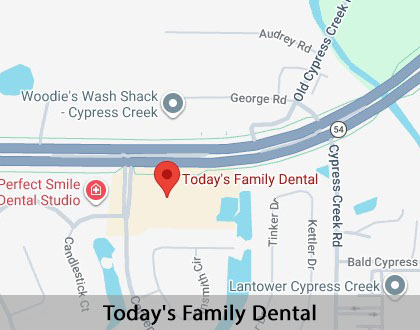
Scan here to open directions to Today's Family Dental on mobile
Back to top of Teeth Whitening
Related Posts
Implant-Supported Dentures: Are They Worth It?
When missing teeth affect your overall quality of life, implant supported dentures offer a solid, lasting fix to restore a healthy smile and clear speech. Modern dental care gives patients great choices for full-mouth restoration. However, few options match the strength and everyday ease of anchor-supported dentures. If you are tired of loose plates or…

Welcome To Today's Family Dental
We are committed to providing quality service to residents located In the Lutz, FL area. Our website has additional information about the following topics: Dentist, Cosmetic Dentist, General Dentist, Family Dentist, Emergency Dentist, Dental Implants, All-on-X Dental Implants, Implant Supported Dentures, Dentures and Dental Crowns.
Explore additional topics covered on our website:
Call Us Today

Scan here to call Today's Family Dental on mobile