
Home Care After Root Canals
Understanding Endodontic Treatment (Root Canal Therapy)
Root canals help dentists save teeth damaged by infection, deep decay, or trauma. In many cases, early treatment prevents extraction and stops pain from worsening. As a result, patients can preserve their natural teeth while restoring comfort and function. Importantly, modern techniques make this procedure far more comfortable than many people expect.
What to Expect During Root Canals
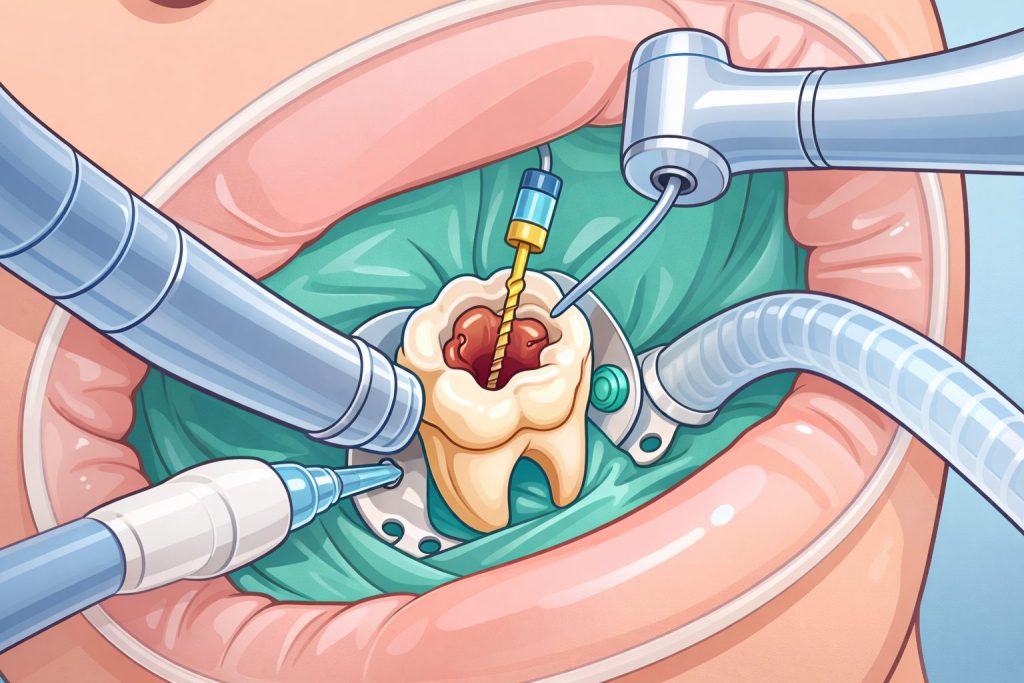
First, your dentist numbs the area to ensure comfort throughout the procedure. Next, they access the inner portion of the tooth and remove the infected nerve tissue. Then, the dentist thoroughly cleans and disinfects the canal. Finally, they seal the tooth to protect it from future infection. In some cases, a crown restores strength and allows normal chewing.
Managing Discomfort After Root Canals
After treatment, you may experience mild soreness or sensitivity for a few days. This happens because the surrounding tissue begins healing. Fortunately, most patients manage discomfort with over-the-counter pain relievers such as ibuprofen or acetaminophen. Over time, pain continues to decrease. However, if discomfort worsens or lasts longer than expected, you should contact your dental provider.
Recovery Tips for Treated Teeth
To promote healing, avoid chewing on the treated tooth for several days. Additionally, choose soft foods to minimize irritation. At the same time, continue brushing and flossing daily, but do so gently around the area. By following these steps, patients often experience a smoother and faster recovery.
Follow-Up Care and Restoration Options
In some situations, your dentist may schedule follow-up visits to place a permanent crown or evaluate healing progress. These appointments are important because they restore full function and prevent future damage. Ultimately, completing recommended visits improves long-term success.
Maintaining Long-Term Oral Health
Overall, prompt treatment plays a critical role in protecting oral health. Therefore, regular dental visits and good hygiene habits remain essential. By addressing problems early, patients reduce the risk of future infections and maintain a healthier smile for years to come.
We Are Offering Botox!
Visit us for a complimentary consultation.
Special Promotion!
$59.00 new patient special on comprehensive exam and full-mouth xray.
