
We often think of bones as rigid and unchanging. In reality, bones constantly remodel themselves. During remodeling, the body replaces old bone with new, stronger bone. It also removes old bone cells and creates new ones.
Sometimes this process weakens the jawbone. This can affect the bones that hold your teeth in place. As you age or develop certain illnesses, you may lose teeth. When a tooth is lost, the surrounding bone can begin to shrink. Dentists call this process resorption.
As bone loss continues, the face can begin to sag. The jaw may look thinner or sunken. This change can affect both appearance and oral health.
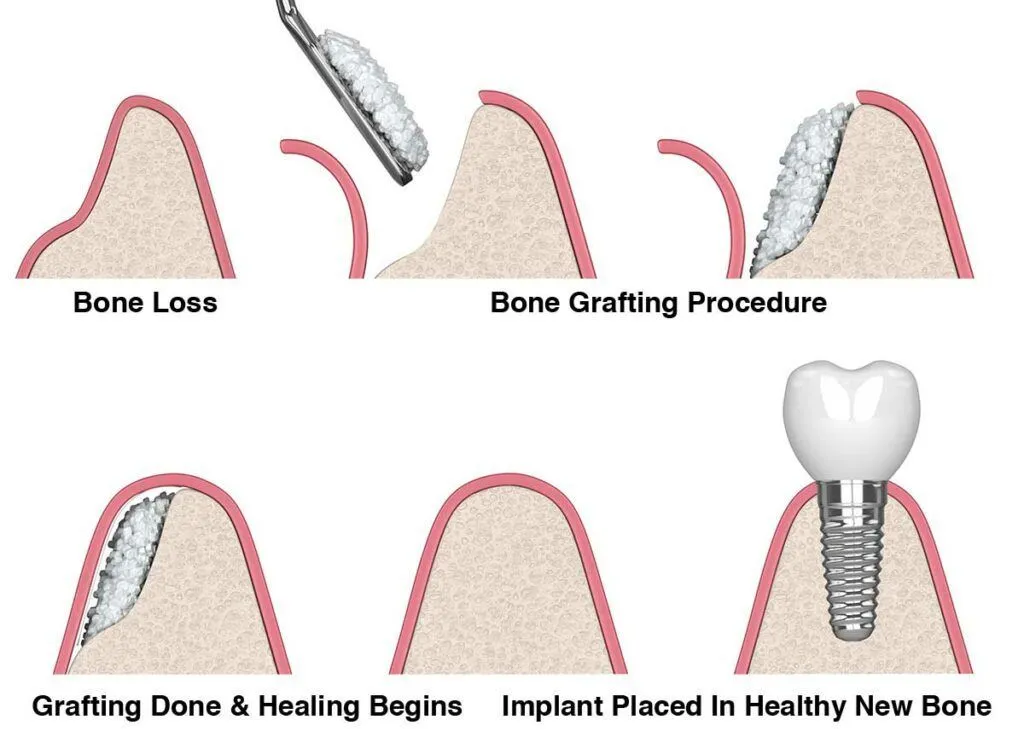
Modern dentistry offers a solution through bone grafting. Dentists use this procedure to rebuild lost bone and strengthen the jaw. Bone grafting can restore support for teeth or prepare the area for dental implants.
Although bone grafting sounds complex, most dentists perform it in their office. The dentist makes a small incision in the gum. Then, they place grafting material directly into the weakened bone area.
The grafting material contains minerals that stimulate new bone growth. Over time, your body builds and deposits new bone around the graft. This strengthens the jaw naturally.
Grafting material comes in several forms, including powder, granules, or gel. The dentist may place it by hand or inject it with a syringe. The material can come from animal sources, human donors, or your own body. A laboratory processes and sterilizes the material to ensure safety.
After placing the graft, the dentist usually covers it with a thin membrane. This membrane protects the area and supports new bone growth as it heals.
Bone Grafting Uses
Bone grafts are used in a variety of dental applications including:
- Teeth Saving – Periodontal disease causes many cases of tooth loss in dental patients. As the supporting bone weakens, teeth can loosen and shift. To protect your smile, your dentist may recommend a bone graft to strengthen the jaw and help save your natural teeth.
- After Tooth Extraction – When a dentist removes an adult tooth, it leaves an empty socket in the jaw. A bone graft can fill that space and strengthen the area. The graft also helps prevent the body from resorbing the surrounding bone and reduces future bone loss.
- Dental Implants – When your dentist places a dental implant, they insert a small titanium post into the jawbone. If the bone is weak, placing the implant can become difficult. A bone graft strengthens the jaw and creates a stable foundation. This allows the dentist to secure the post and support the final implant properly.
Your Expectations
While placing a bone graft is a minor procedure, it still requires a small incision. Anytime a dentist makes an incision, there is a risk of infection. That is why you must allow proper time for healing.
Before the procedure, your dentist will apply local anesthesia to numb the treatment area. This keeps you comfortable during the graft placement.
After the procedure, you may feel mild soreness. You might also notice some swelling or redness near the incision. Most patients manage this discomfort with over-the-counter pain medication. Symptoms typically improve within a few days.
Overview
Many patients with periodontal disease or other dental concerns experience bone loss that complicates treatment. Bone loss can weaken the jaw and affect overall oral health.
Fortunately, bone grafting offers a reliable solution. This procedure rebuilds lost bone and strengthens the jaw. It can improve both appearance and long-term dental results.
If you believe bone grafting may benefit you, contact your dentist today to schedule an evaluation.
We Are Offering Botox!
Visit us for a complimentary consultation.
Special Promotion!
$59.00 new patient special on comprehensive exam and full-mouth xray.
